Footwear
Road shoes, trail shoes, race shoes, and the pairs in your current rotation.
Running gear organizer
Kitlo gives runners one place for shoes, apparel, watches, hydration, nutrition, and accessories—then turns that library into preparation for the next effort.
In short
A running gear organizer keeps the equipment you own in one structured library. Kitlo goes further by letting you build reusable setups and associate completed activities with the gear you used.
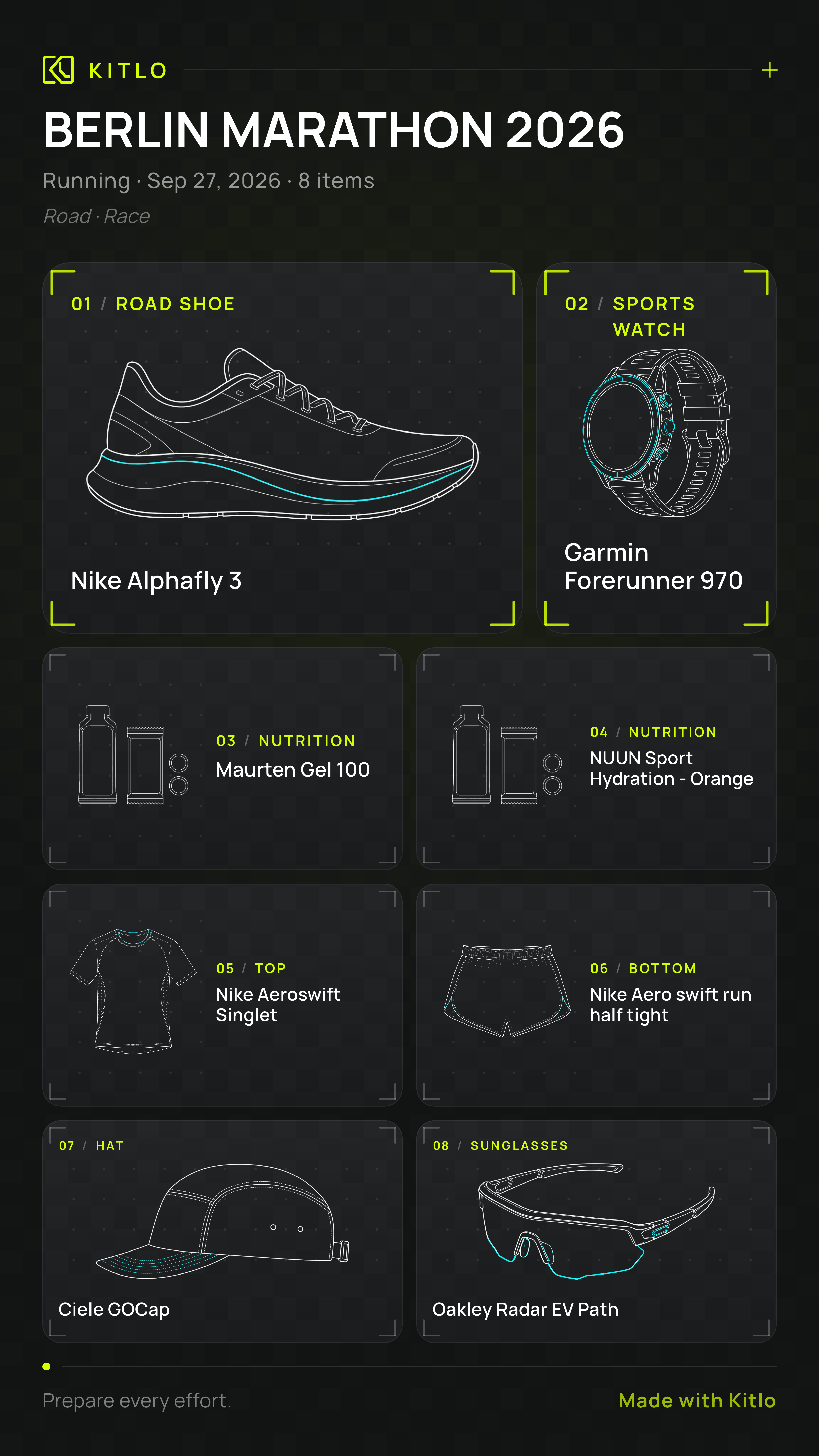
A useful running gear library reflects what you actually own, not a generic shopping list. Kitlo keeps different equipment types together so the items you rely on are easier to find and reuse.
Road shoes, trail shoes, race shoes, and the pairs in your current rotation.
Tops, shorts, tights, socks, jackets, hats, gloves, and weather layers.
Running watches and the equipment you use to record or support an effort.
Bottles, vests, flasks, gels, drink mix, and other preparation items.
Belts, lights, sunglasses, poles, and the small items that are easy to forget.
Add from the Kitlo catalogue when available or record an item manually.
You do not need to catalogue everything at once. Start with your active shoes, watch, everyday apparel, and hydration. Then build one easy-run setup and one long-run or race setup. A smaller library that stays current is more useful than a perfect inventory you never revisit.
Kitlo begins with running and is designed around preparation: knowing what you own, what belongs together, and what you used when the effort is complete.
Kitlo focuses on the preparation around an activity: your gear library, reusable setups, readiness, and the equipment associated with completed efforts. It works alongside activity data rather than replacing the tracker you use during a run.
Yes. You can add an item from the catalogue when it is available or create your own gear entry when needed.
Kitlo is designed for shoes, apparel, watches, hydration, nutrition, and accessories. The useful starting point is the equipment you currently own and use.
Yes. You can associate activities with the equipment used and review equipment usage over time.
Preparation First